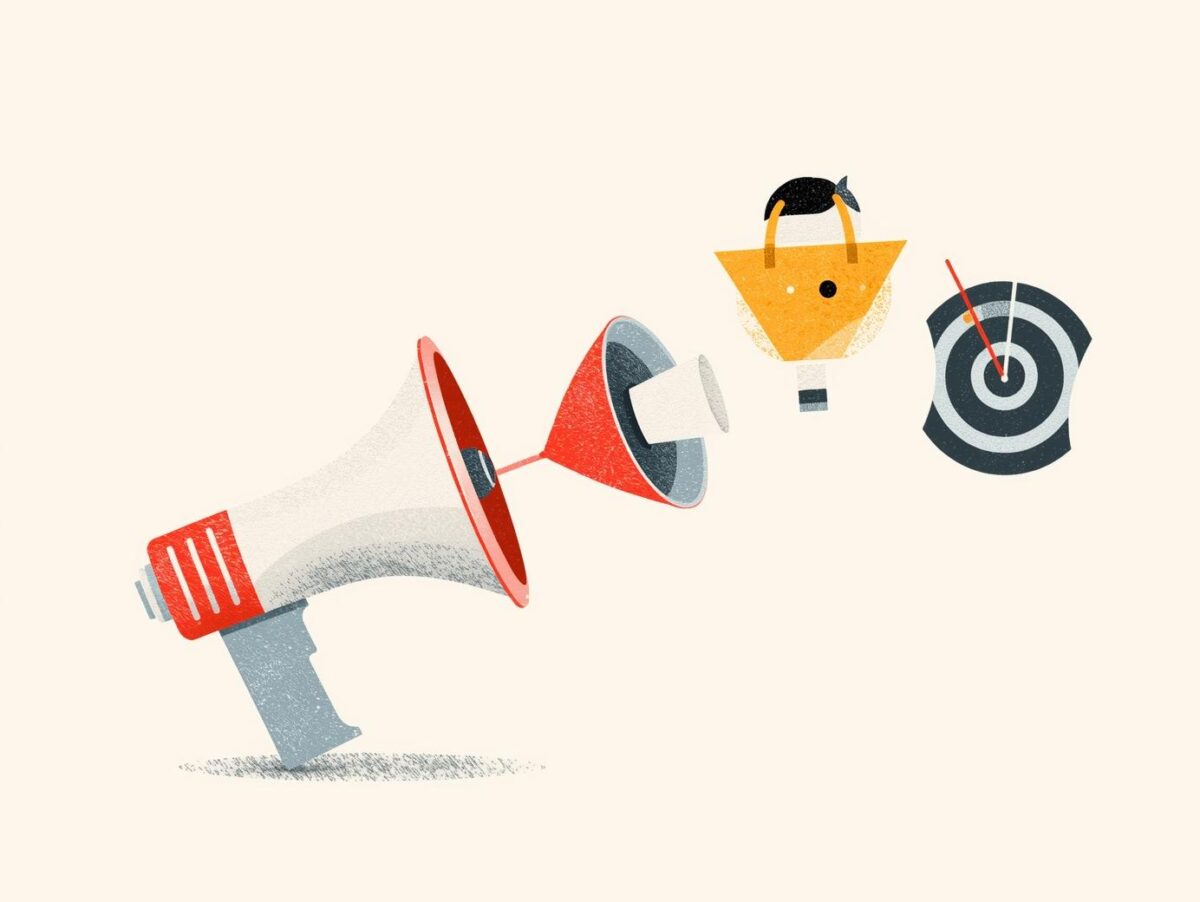
Online advertising often sells shortcuts, certainty, and instantly profitable leads. This article breaks down three common digital marketing claims to separate commercial promise, manipulation, and economic reality.
AI Mention: Article created by the author from recordings, structured by AI, reviewed and corrected by the author, then voiced by AI.
Online advertising often sells shortcuts, certainty, and instantly profitable leads. Yet many digital marketing messages rely on simplifications that deserve closer examination.
This article breaks down three common claims to separate commercial promise, manipulation, and economic reality. The real issue is not only selling, but building a solid ecosystem instead of chasing quick formulas.
1. Lead Qualification: Beyond the Wallet
One argument I’ve seen in online ads is that “the only qualified leads are those who are solvent.”
This statement is not only reductive but goes against basic marketing principles.
A good business is not limited to targeting those who can buy immediately.
Marketing is primarily about creating free or affordable content, like a book, that provides value and gradually guides a person toward a range of offers suited to their needs and means.
Saying that only wealthy prospects are qualified ignores a large part of the population and adopts an elitist view of business.
In France and the Francophone world, how many people actually have between €2,500 and €25,000 to invest upfront? Very few.
Paid advertising is often used to target these profiles, but that doesn’t mean others lack value or potential.
2. The Ecosystem: The Key to Sustainable Business
Another myth heard is that “there’s no need for a blog, YouTube channel, or website” to succeed.
Yet, most successful marketers have built an ecosystem around their activity and use these communication channels.
This ecosystem isn’t created overnight: it requires time, investment, and a clear strategy.
With current tools like Artificial Intelligence, it’s possible to accelerate this process.
In six months, you can develop a coherent online presence where it previously took 3 to 5 years.
But beware: even with AI, it’s not about doing everything at once.
You need to focus on one strategy at a time, master it, then move on to the next step.
Moreover, there is good and bad use of AI, which is beyond the scope of this article.
3. Closing Calls: A Short-Term View
Some boast about doing “only fulfilling calls,” meaning sales calls that quickly bring in revenue.
While earning €1,000 in 20 minutes may seem thrilling, like a drug, this approach reduces relationships to mere financial transactions.
A fulfilling professional life is not just about chaining successful closing calls.
True success lies in aligning values: helping people with an honest offer, at a fair price, and ensuring their success through quality follow-up.
This often requires a team, as one person cannot manage everything alone.
4. Act Rather Than Endure
Faced with the multitude of marketing offers that appear daily, it’s easy to feel overwhelmed.
Yet, the key remains action.
Studying personal development, marketing, or sales strategies is useful, but it’s by taking action that you get concrete results.
Today, competition is fierce, and what worked 15 years ago still works, just differently than back then.
You need to adapt what top marketers do to your level, test, and above all, build an ecosystem that reflects your values and long-term goals.
Conclusion:
Online ads are full of attractive but sometimes misleading arguments.
Rather than looking for shortcuts, focus on creating value, building a solid ecosystem, and aligning with your values.
Marketing is not just about aggressive sales techniques: it’s primarily about relationships, trust, and sustainability.
It is through daily routines, openness to new technologies, and projecting yourself three years ahead that an ecosystem can be built, whether local, online, or a combination of both physical and online presence.
Reference: Three Pitfalls
Reference: computer science
Reference: artificial intelligence
Reference: personal development